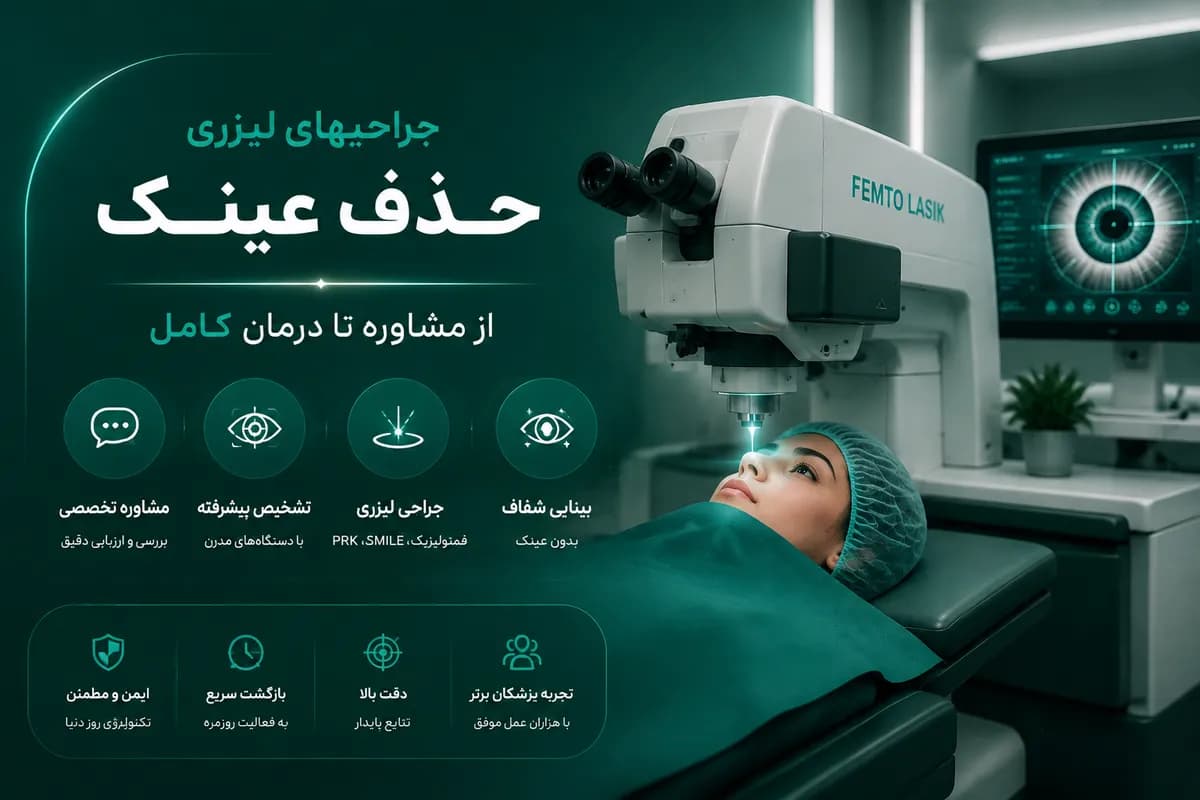
Laser Eye Surgery to Get Rid of Glasses – From Consultation to Complete Treatment
Laser Eye Surgery to Get Rid of Glasses and effective method for correcting vision problems such as myopia, hyperopia, and astigmatism. The process includes thorough consultation, selecting the appropriate technique, and complete treatment to restore clear and natural vision.
Laser Eye Surgery for Glasses Removal: From Consultation to Complete Treatment
Introduction
Dependence on glasses or contact lenses can create limitations for many people, especially during daily activities, sports, driving, and tasks that require precision. Today, advances in ophthalmology have made it possible for many individuals to correct refractive errors and reduce their dependence on glasses through modern laser eye surgery techniques.
Laser procedures for glasses removal, such as Femto-LASIK, PRK, and SMILE, use advanced technologies and are performed only after a detailed evaluation of the eyes. These procedures are designed to correct myopia, hyperopia, and astigmatism.
What Is Laser Eye Surgery for Glasses Removal?
In a healthy eye, light passes through the cornea and lens and is focused precisely on the retina, creating a clear image. In people with refractive errors, this focusing process does not occur properly, resulting in blurred vision.
In laser vision correction surgery, the shape of the cornea is modified with very high precision so that light can be focused more accurately on the retina.
The main goals of these procedures are:
Reducing dependence on glasses
Improving visual quality
Correcting refractive errors
Increasing comfort in daily activities
Who Is a Suitable Candidate for Laser Eye Surgery?
Laser vision correction is not suitable for everyone and requires a specialized evaluation. In general, suitable candidates should meet conditions such as:
Being at an appropriate age for vision correction surgery
Having a stable eye prescription for a certain period
Having a sufficiently healthy cornea
Having no active eye diseases that may affect the procedure
Having adequate corneal thickness
Before making a decision, detailed examinations and tests are performed to ensure that the procedure is safe and appropriate.
Steps of Laser Vision Correction Surgery
Step One: Consultation and Specialized Eye Examination
The first step is a complete evaluation of the eyes by a specialist surgeon. During this stage, factors such as the following are assessed:
Degree of refractive error
Corneal thickness
Corneal shape and curvature
Ocular surface health
Retinal condition
The results of these examinations determine whether the patient is a suitable candidate for laser surgery.
Step Two: Choosing the Best Treatment Method
After evaluating the condition of the eyes, the most appropriate vision correction technique is selected. Each method has its own characteristics, and the choice depends on the structure of the eye and the individual needs of the patient.
Femto-LASIK
Femto-LASIK is one of the most common and advanced methods of laser vision correction and is performed using two types of laser technology.
First, a very thin corneal flap is created using a femtosecond laser. Then, an excimer laser reshapes the cornea with high precision.
Benefits of Femto-LASIK:
High precision in vision correction
Rapid improvement in vision
Less discomfort compared with some other procedures
Faster return to daily activities
PRK
PRK is one of the older but still highly effective methods for correcting refractive errors.
In this procedure, the surface of the cornea is reshaped without creating a corneal flap. Vision improves gradually as the cornea heals.
PRK may be a suitable option for some patients with thinner corneas or certain specific eye conditions.
SMILE
SMILE is one of the newest laser vision correction techniques and is performed through a very small incision in the cornea.
In this procedure, a small piece of corneal tissue responsible for myopia is removed.
Features of SMILE:
Less disruption to the corneal surface
Smaller incision compared with some other methods
Greater preservation of corneal structure
A suitable option for some patients with myopia
Can Everyone Stop Wearing Glasses After Surgery?
The result of laser eye surgery depends on several factors, including the eye prescription, corneal health, age, ocular surface condition, and the body’s response to treatment.
The goal of these procedures is to achieve the best possible vision and reduce dependence on glasses, but the final outcome can vary from one person to another.
Care Before and After Surgery
Before Surgery:
Complete eye examinations
Detailed corneal evaluation
Informing the doctor about medical conditions and medications
Following all preoperative instructions
After Surgery:
Using prescribed eye drops regularly
Avoiding rubbing the eyes
Following the necessary precautions during the first few days
Attending follow-up appointments to monitor recovery
Following these recommendations plays an important role in achieving the desired outcome.
The Role of a Corneal Specialist in Laser Vision Correction
Proper patient selection and choosing the most appropriate procedure are among the most important factors in the success of laser eye surgery.
A corneal specialist carefully evaluates the structure of the eye, the condition of the cornea, and the patient’s visual needs in order to select the most appropriate technique, reduce the risk of complications, and achieve the best possible result.
Conclusion
Laser eye surgery for reducing dependence on glasses is one of the major advances in ophthalmology and has helped many people improve their vision and rely less on corrective eyewear.
From Femto-LASIK and PRK to the newer SMILE technique, the most suitable procedure should be selected based on a detailed eye examination and the recommendation of a specialist surgeon.
Specialized consultation, accurate diagnosis, and the use of modern technologies can provide a pathway toward better vision and a more comfortable life with less dependence on glasses.
At the end of this page, we have prepared a list of the key steps involved in laser eye surgery for reducing dependence on glasses.
These procedures can help you achieve clearer vision with less dependence on glasses or contact lenses.
1. Consultation and Detailed Eye Evaluation
The first step is to visit an ophthalmologist for a complete evaluation of your eyes. After a thorough examination, it can be determined whether your eyes are suitable for laser vision correction.
2. Preparation Before Surgery
The second step is to follow specific instructions before surgery. These may include stopping the use of contact lenses for a certain period and avoiding certain medications when necessary.
Your doctor will explain these instructions carefully and make sure you are properly prepared for the procedure.
3. LASIK or PRK Surgery
The third step is the LASIK or PRK procedure, which is generally completed within a short period. During this stage, the laser precisely reshapes the corneal tissue to correct vision problems.
4. Essential Care After Surgery
The fourth step is proper postoperative care to support healing. This includes using prescribed eye drops and attending regular follow-up visits so the doctor can monitor the condition of your eyes.
5. Final Results and Significant Improvement
Many patients experience noticeable improvement after LASIK or PRK and may significantly reduce their need for glasses or contact lenses.
please Login to leave a comment
Add Your Comment
Reviews