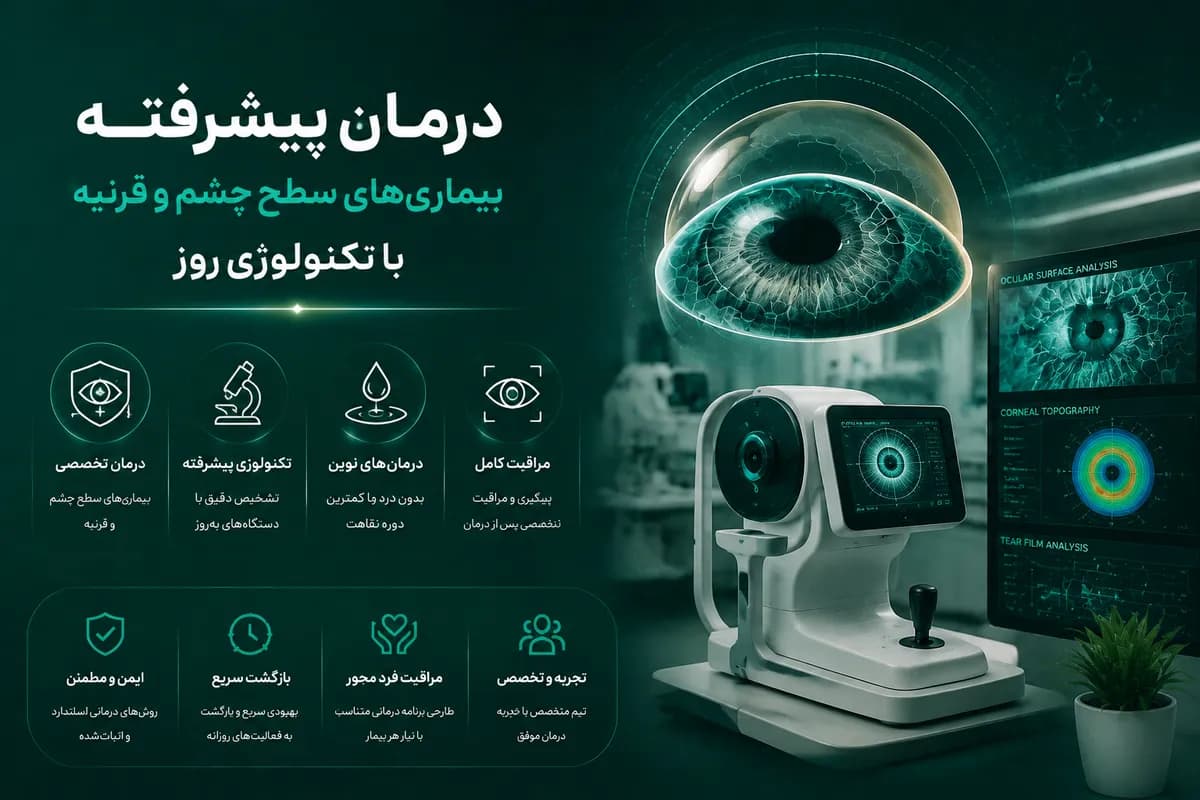
Advanced Treatment of Ocular Surface and Corneal Diseases with Modern Technology
This article explores advanced methods for treating ocular surface and corneal diseases. From cutting-edge laser technology to modern corneal transplantation techniques, it presents effective solutions to improve vision and enhance patients' quality of life.
Advanced Treatment of Ocular Surface and Corneal Diseases Using Modern Technology
Introduction
The health of the ocular surface and cornea plays a major role in visual quality. The cornea, as the transparent front layer of the eye, is responsible for focusing light and helping create clear vision. Any disorder affecting this area, from dry eye and surface inflammation to complex corneal diseases, can lead to blurred vision, discomfort, and a reduced quality of life.
Today, thanks to major advances in diagnostic and treatment technologies, many ocular surface and corneal diseases can be managed and treated using modern, precise, and minimally invasive methods.
What Are Ocular Surface Diseases?
The ocular surface includes the cornea, conjunctiva, and tear film, all of which help maintain transparency, protect the eye, and support clear vision.
Disorders affecting the ocular surface may cause problems such as:
Severe dry eye
Ocular surface inflammation
Eye sensitivity and redness
Foreign-body sensation
Fluctuating blurred vision
Corneal injuries
Corneal ulcers or opacities
Accurately identifying the cause of the condition is the first step in choosing the most appropriate treatment.
Dry Eye: One of the Most Common Ocular Surface Problems
Dry eye occurs when tear production decreases or the quality of the tear film is inadequate. This condition may cause burning, itching, a feeling of heaviness in the eyes, and blurred vision.
Several factors can contribute to dry eye, including prolonged use of smartphones and computers, aging, certain medical conditions, some medications, and environmental factors.
Modern Treatments for Dry Eye
Today, dry eye treatment is no longer limited to artificial tear drops. More advanced methods are available to help manage the condition.
Some modern approaches include:
Specialized Medical Treatments
Anti-inflammatory eye drops, medications that support tear gland function, and other targeted treatments may help improve ocular surface health.
Treatment of Meibomian Gland Dysfunction (MGD)
The meibomian glands play an important role in preventing tears from evaporating too quickly. When these glands do not function properly, treatments such as thermal therapy and specialized eyelid cleansing may help improve the tear film.
Advanced Diagnostic Technologies
Modern ocular surface diagnostic devices make it possible to evaluate tear quality, inflammation levels, and gland function more precisely, allowing treatment to be selected according to each patient’s actual condition.
Modern Treatment of Corneal Diseases
The cornea may become damaged due to conditions such as keratoconus, infection, trauma, or inflammatory disease.
Today, several advanced treatment options are available for corneal disorders, including the following:
Corneal Cross-Linking
Corneal cross-linking is an important treatment for keratoconus. It helps strengthen corneal tissue and may prevent further progression of corneal thinning and deformation.
In this procedure, riboflavin and controlled ultraviolet light are used to strengthen the internal collagen bonds of the cornea.
Advanced Ocular Surface Reconstruction Treatments
In some cases of ocular surface damage, tissue reconstruction and regenerative treatments may help improve corneal function.
These treatments are performed with the aim of:
Reducing inflammation
Improving corneal transparency
Improving ocular surface quality
Preserving vision
The Role of Advanced Imaging in Corneal Disease Diagnosis
One of the most important advances in ophthalmology is the use of precise imaging technologies to evaluate the structure of the eye.
Technologies such as:
Corneal topography
Corneal tomography
Corneal thickness measurement
Ocular surface evaluation
help physicians detect diseases at earlier stages and choose the most appropriate treatment.
Treatment of Complex Corneal Conditions
When corneal damage is severe, procedures such as corneal transplantation may be required.
Modern corneal transplant techniques, including lamellar transplantation, have made it possible in some cases to provide more precise treatment with fewer complications and a shorter recovery period.
The Importance of Specialized Treatment for Ocular Surface and Corneal Diseases
Ocular surface and corneal diseases require careful evaluation by an ophthalmologist and corneal specialist. Appropriate treatment is not based only on visible symptoms; it requires a complete assessment of the eye’s structure and selection of a treatment method suited to each patient’s condition.
The use of modern technologies, advanced diagnostic equipment, and up-to-date treatment methods has helped many patients achieve better vision, reduced symptoms, and improved quality of life.
Conclusion
Advances in ophthalmology in recent years have changed the way ocular surface and corneal diseases are treated. From dry eye and surface inflammation to more complex conditions such as keratoconus and corneal injuries, modern techniques now allow for more accurate diagnosis and more effective treatment.
Timely evaluation and selection of the appropriate treatment can play an important role in preserving eye health and preventing further loss of vision.
please Login to leave a comment
Add Your Comment
Reviews